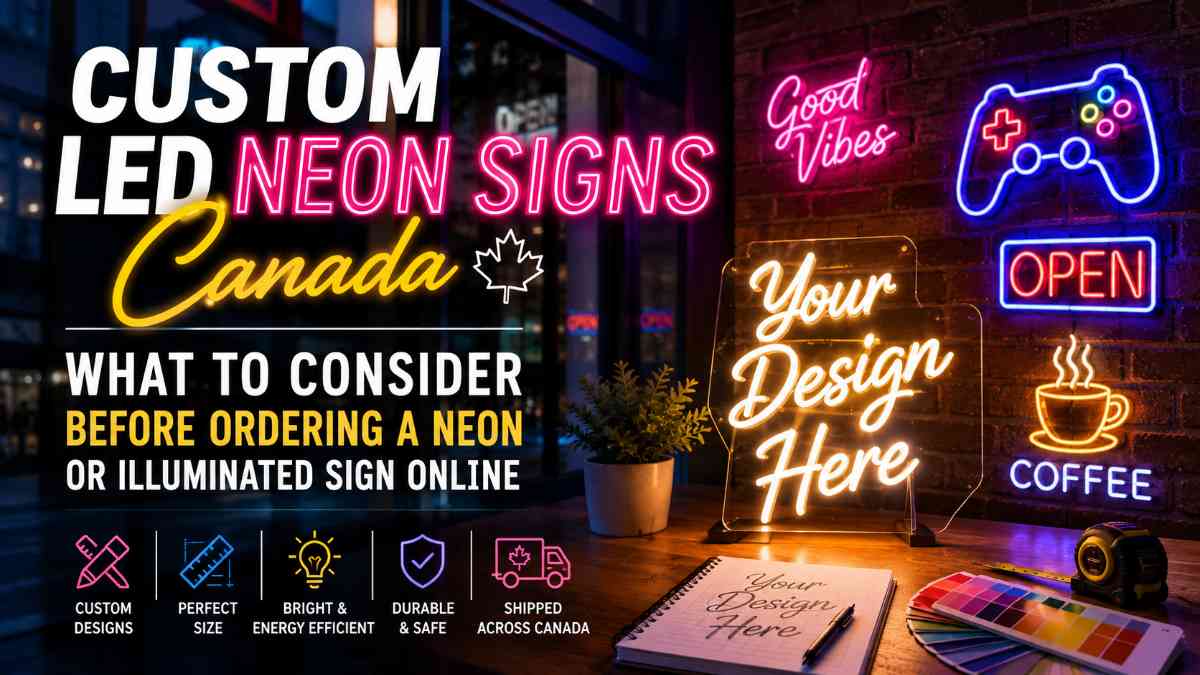
Custom LED neon signs are now used far beyond traditional storefront environments. Across Canada, businesses and homeowners increasingly use illuminated signs inside cafés, salons, retail spaces, offices, gaming rooms, wedding venues, studios, restaurants, and residential interiors.
The growing popularity of LED-based signage has also changed how people approach sign design and installation. Buyers are no longer choosing only between colors and fonts. Most decisions now involve placement, visibility, materials, mounting styles, brightness levels, and long-term usability within the intended environment.
Whether the sign is intended for a storefront window, business wall, reception area, home office, or entertainment room, several practical considerations usually affect how well the finished sign performs once installed.
Why LED Neon Signs Have Become More Common Across Canada
Traditional glass neon signs still remain recognizable, but LED-based systems have become significantly more common for residential and commercial applications.
Several factors contribute to this shift:
- Lower overall weight
- Easier wall mounting
- Greater flexibility in sizing
- Lower energy usage
- Simpler indoor installation
- Reduced fragility compared with glass tubing
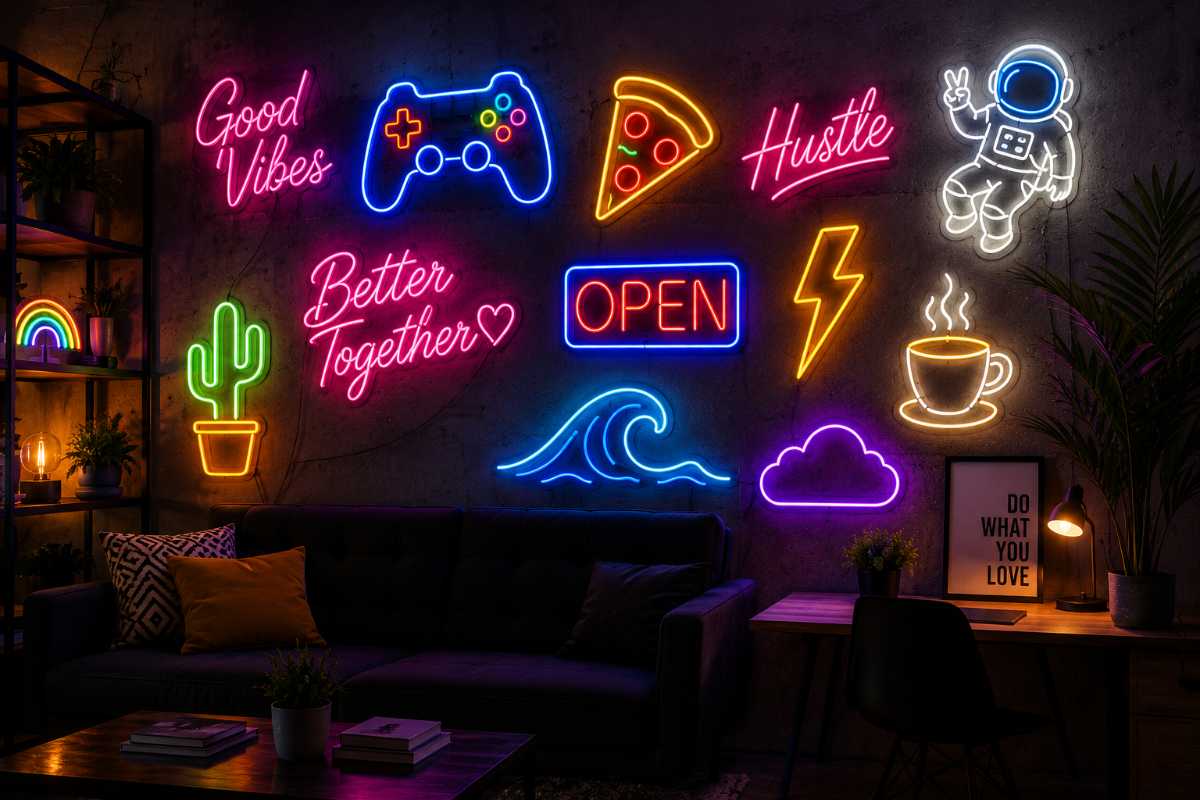
Because modern LED neon systems work in both residential and business environments, they now appear in spaces that previously would not have used illuminated signage.
Common examples include:
- Gaming rooms
- Home bars
- Retail stores
- Café interiors
- Salon reception areas
- Wedding displays
- Office branding
- Content creator studios
- Commercial window signs
Understanding Where the Sign Will Be Installed
One of the first practical decisions usually involves installation location.
The same design may perform very differently depending on the environment.
Indoor Neon Sign Installations
Indoor signs are commonly used for:
- Bedrooms
- Gaming rooms
- Home offices
- Retail interiors
- Restaurants
- Reception areas
- Photo backdrops
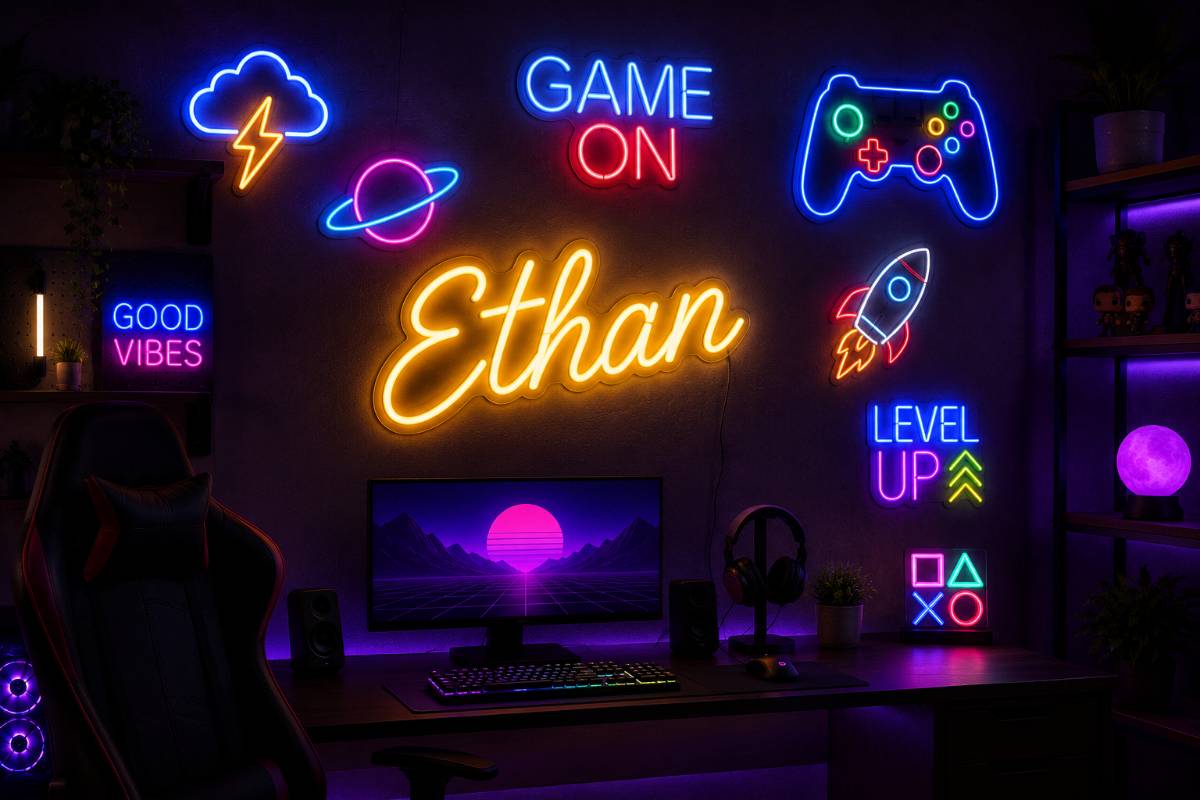
Indoor environments generally allow greater flexibility with:
- Brightness levels
- Color selection
- Placement height
- Decorative styling
Outdoor and Storefront Installations
Exterior environments require additional consideration because Canadian weather conditions vary considerably throughout the year.
Outdoor signage may encounter:
- Snow
- Rain
- Wind
- Moisture exposure
- Seasonal temperature shifts
Businesses using storefront signage Canada solutions often combine:
- Window lettering
- Store window decals
- Illuminated signs
- Commercial window signs
- Window advertising graphics
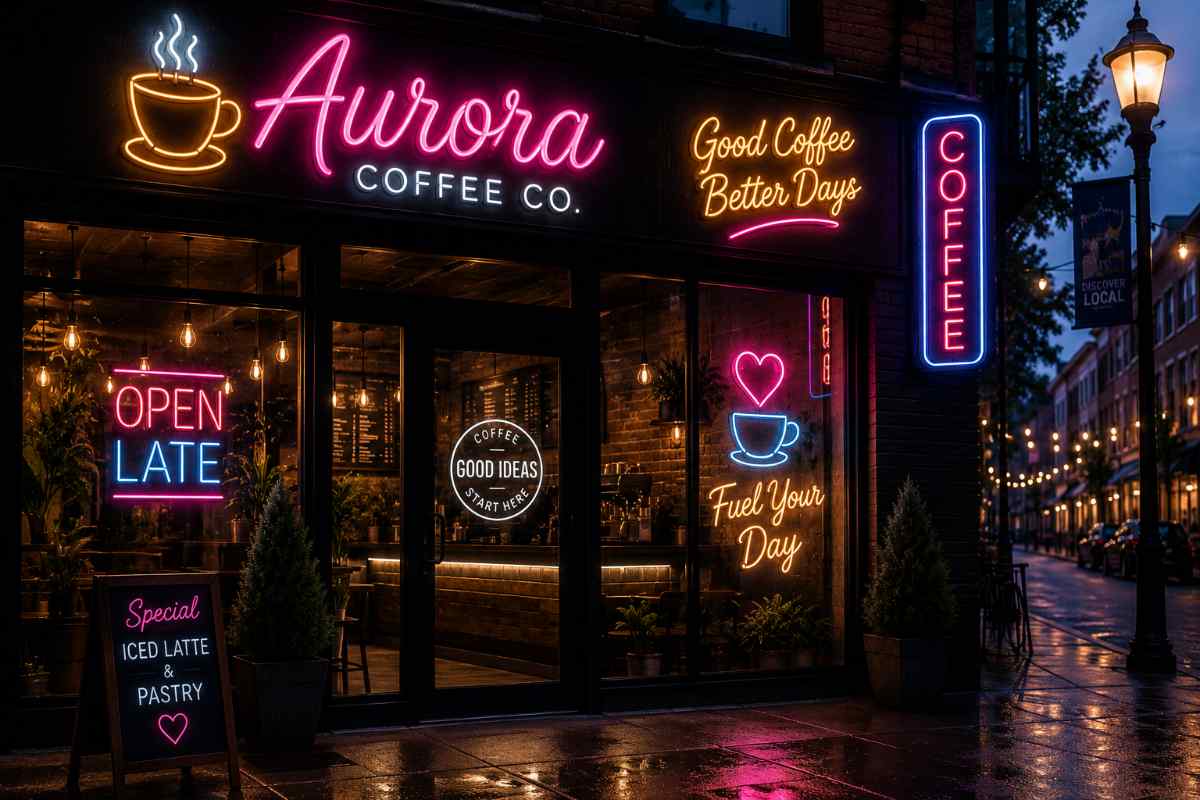
Storefront visibility also changes depending on viewing distance, surrounding lighting, and traffic speed.
Choosing the Right Size Before Ordering
Sizing affects visibility more than many buyers initially expect.
A sign intended for:
- a bedroom wall
- a reception counter
- a storefront window
- a retail feature wall
will usually require very different dimensions.
Smaller Decorative Signs
Often used for:
- names
- short phrases
- gaming setups
- home décor
These signs typically prioritize atmosphere over long-distance visibility.
Larger Commercial Signs
Business environments usually require greater readability.
This becomes more important for:
- storefront windows
- reception branding
- salon walls
- café signage
- office displays
Signs viewed from sidewalks or roads generally need stronger visibility from distance.
Brightness Levels and Viewing Conditions
Brightness affects both readability and comfort.
Signs that appear balanced indoors may become difficult to see in brighter storefront environments.
Lower Ambient Lighting Environments
Examples include:
- gaming rooms
- restaurants
- bars
- bedrooms
These spaces often use softer brightness levels for atmosphere.
Bright Commercial Spaces
Retail environments frequently require:
- stronger illumination
- higher contrast
- greater readability during daylight
Storefront window placement often introduces additional glare and reflection considerations.
Color Choices Can Affect Visibility and Atmosphere
Different color combinations create different viewing experiences.
Popular choices for custom neon signs Canada installations include:
- Warm white
- Ice blue
- Soft pink
- Amber
- Red
- RGB multi-color systems
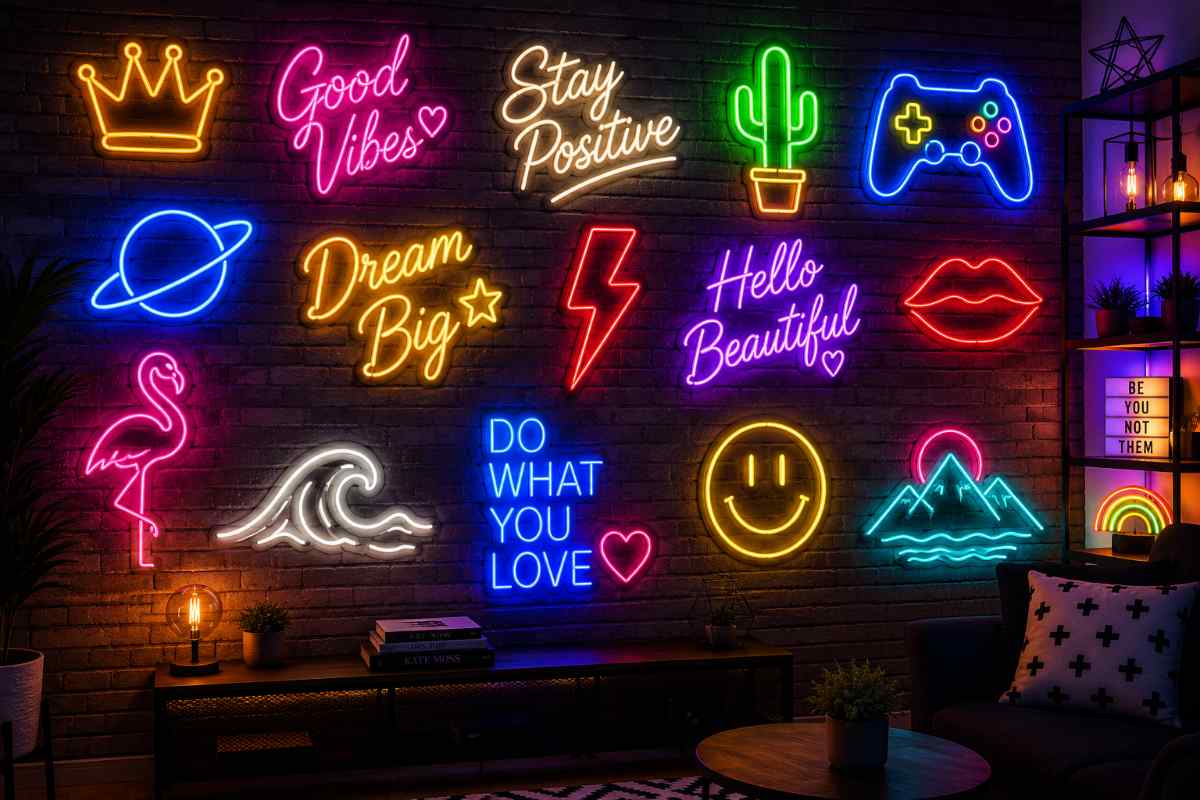
Businesses often select colors that align with existing branding while residential buyers frequently prioritize room atmosphere and décor compatibility.
Fonts and Design Layout Influence Readability
Some sign styles focus heavily on decorative appearance while others prioritize quick readability.
Script and Handwritten Fonts
Often used for:
- wedding signs
- bedroom décor
- personalized neon signs
- decorative wall installations
These styles create softer visual presentation but may become harder to read from greater distance.
Bold Sans-Serif Styles
Commonly used for:
- storefront signage
- business logos
- reception branding
- commercial displays
These layouts generally improve readability in customer-facing environments.
Mounting Styles Change the Final Appearance
Mounting decisions affect both visibility and installation flexibility.
Wall-Mounted Signs
Common for:
- offices
- bedrooms
- salons
- cafés
- storefront interiors
Hanging Signs
Often used in:
- retail storefronts
- window displays
- commercial interiors
Acrylic Backing Styles
Popular backing options include:
- Clear acrylic
- Cut-to-shape backing
- Full rectangular backing
Each style changes the visual appearance once installed.
Storefront Window Signs Require Different Planning
Storefront environments create different visibility conditions compared with residential interiors.
Businesses frequently combine:
- storefront window lettering
- illuminated logos
- commercial window signs
- store window decals
- window advertising graphics

Several factors affect storefront readability:
- Exterior reflections
- Sunlight exposure
- Evening lighting
- Traffic direction
- Viewing angle
Signs that look bright indoors may appear very different from the sidewalk during daylight hours.
Comparing LED Neon Signs With Traditional Glass Neon
Traditional neon still remains part of many commercial environments, but LED-based alternatives have become more practical for a wider range of installations.
Because LED systems are easier to install and maintain, they are now commonly used in both residential and business environments throughout Canada.
Residential Uses Continue Expanding Beyond Basic Décor
Many homeowners now use illuminated signs as part of room design rather than as standalone novelty pieces.
Common residential applications include:
- Personalized neon signs Canada
- Gaming room signs
- Home office branding
- Basement entertainment areas
- Home bar lighting
- Neon name sign Canada designs
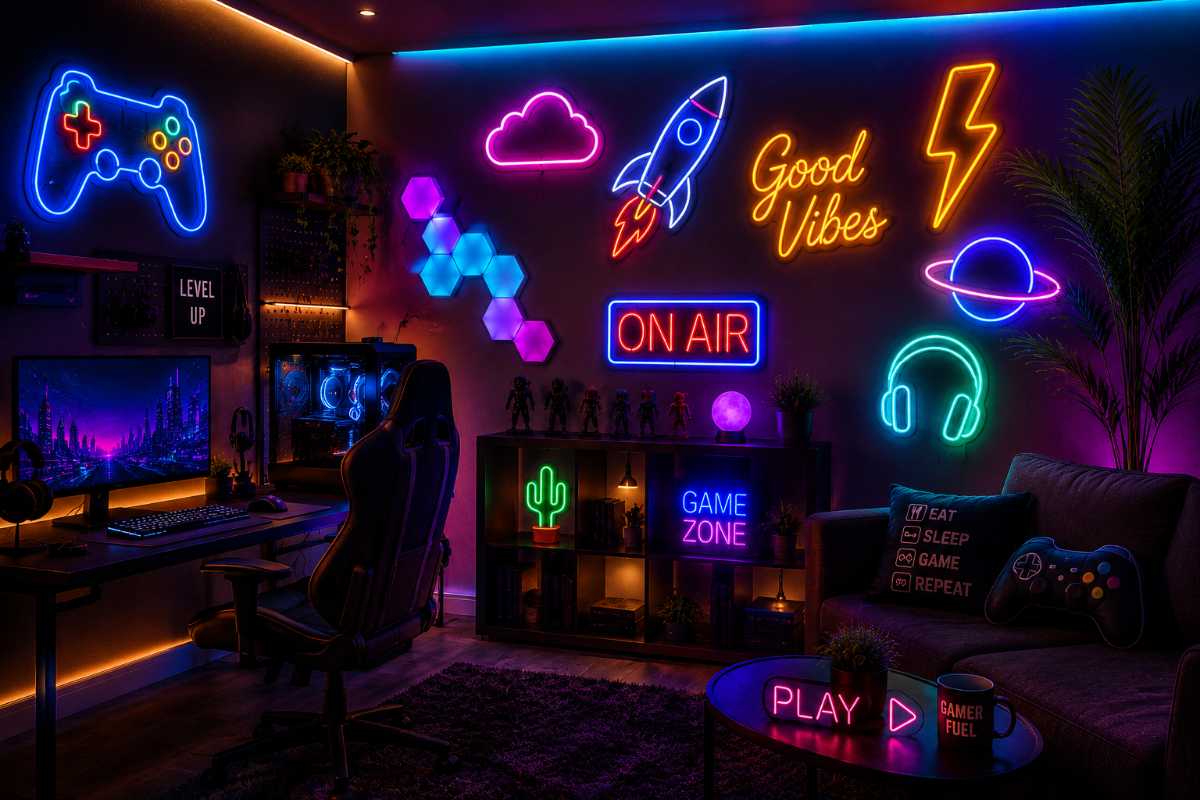
Modern LED signs are often integrated directly into the room layout itself.
What Businesses Usually Consider Before Ordering
Commercial buyers often evaluate signage differently from residential buyers.
Important considerations usually include:
- Brand consistency
- Long-distance readability
- Mounting flexibility
- Window visibility
- Electrical access
- Interior lighting conditions
Businesses also frequently combine illuminated signs with:
- storefront window lettering
- decals
- printed graphics
- branded wall elements
Shipping and Installation Considerations Across Canada
Ordering neon signs online Canada wide often involves practical installation planning before purchase.
Important considerations may include:
- Mounting surface type
- Sign dimensions
- Cable routing
- Indoor or outdoor installation
- Access to power outlets
Larger commercial signs may also require additional installation planning depending on placement height and wall materials.
Questions People Commonly Ask Before Ordering
Are LED neon signs suitable for homes?
Modern LED neon systems are commonly used in bedrooms, gaming rooms, home offices, entertainment spaces, and apartment interiors.
Can storefront neon signs remain visible during daylight?
Visibility depends heavily on brightness levels, contrast, viewing angle, and surrounding lighting conditions.
Are LED neon signs easier to install than traditional neon?
LED systems are generally lighter and easier to mount compared with traditional glass neon systems.
Can custom signs be used outdoors in Canada?
Outdoor installations require materials and electrical components designed for exterior exposure and changing weather conditions.
What size works best for storefront signs?
The intended viewing distance usually affects the appropriate size more than the wall dimensions alone.
Can businesses combine neon signs with window decals?
Many storefronts combine illuminated signage with decals, graphics, and storefront window lettering for layered visibility.
Choosing a Sign That Fits the Space Instead of Following Trends
The most effective neon sign installations usually feel connected to the environment where they are placed.
A gaming room sign, storefront logo, salon display, wedding backdrop, and reception wall all serve different purposes. Placement, visibility, readability, and surrounding lighting conditions often matter more long term than selecting the most visually dramatic design.
Related Guides