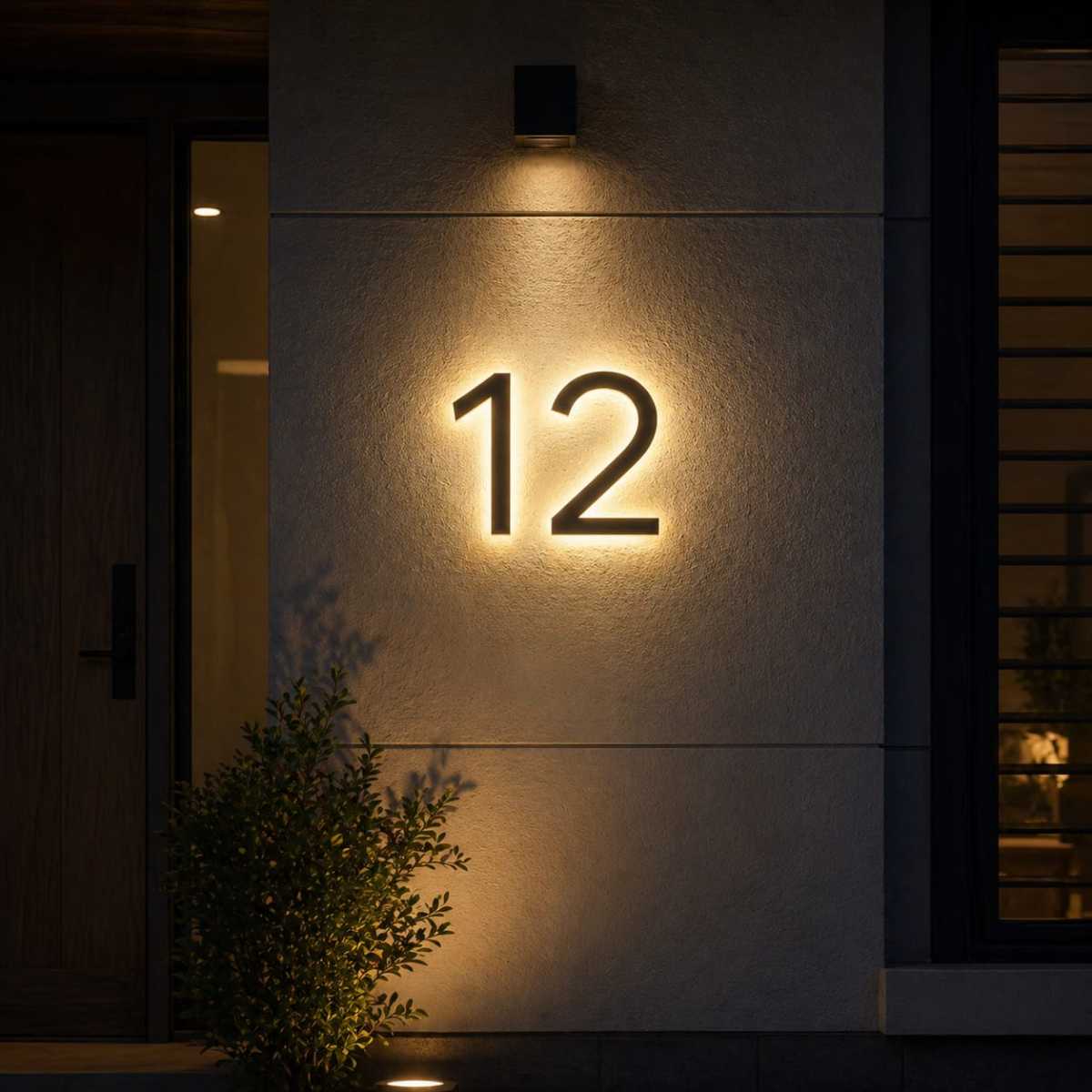
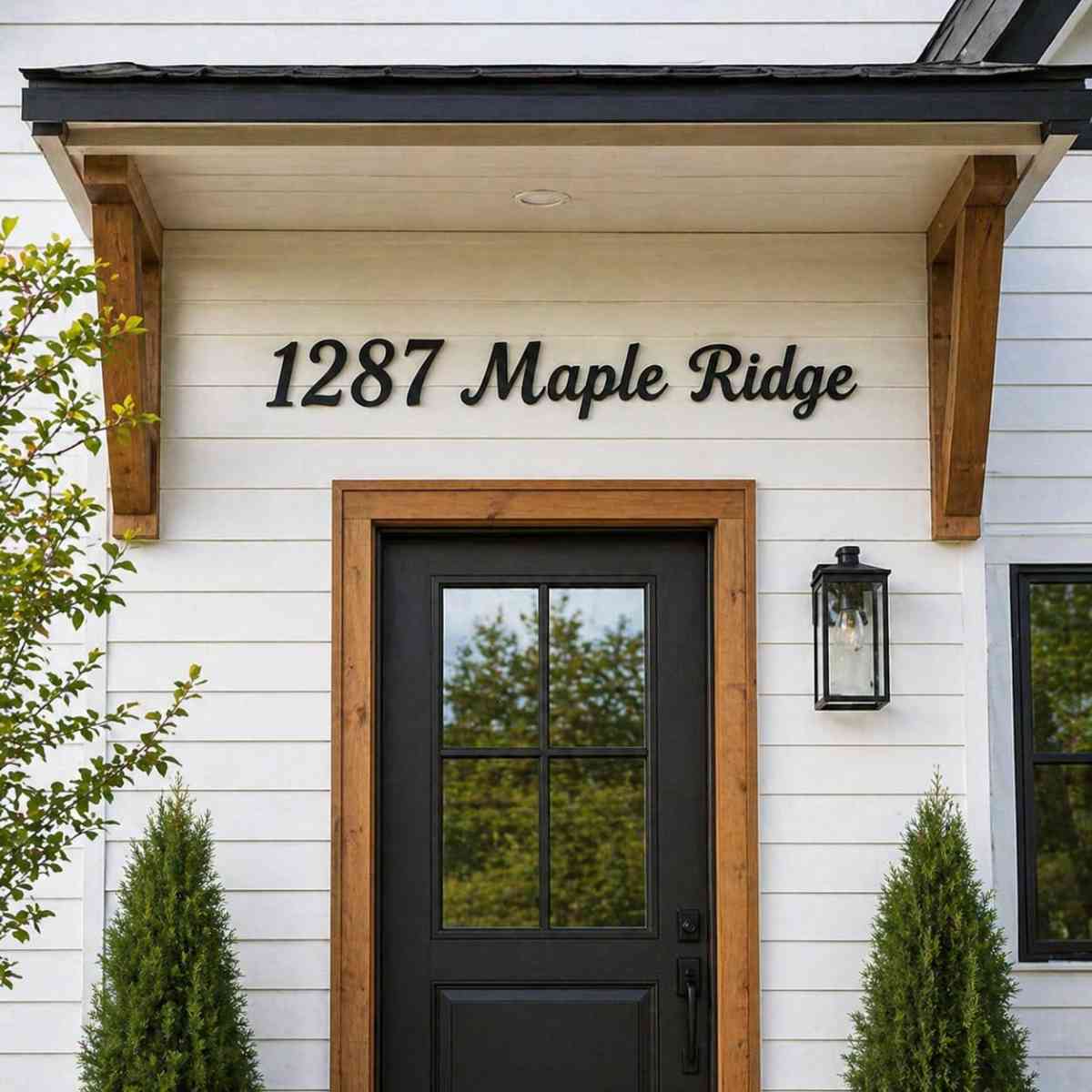
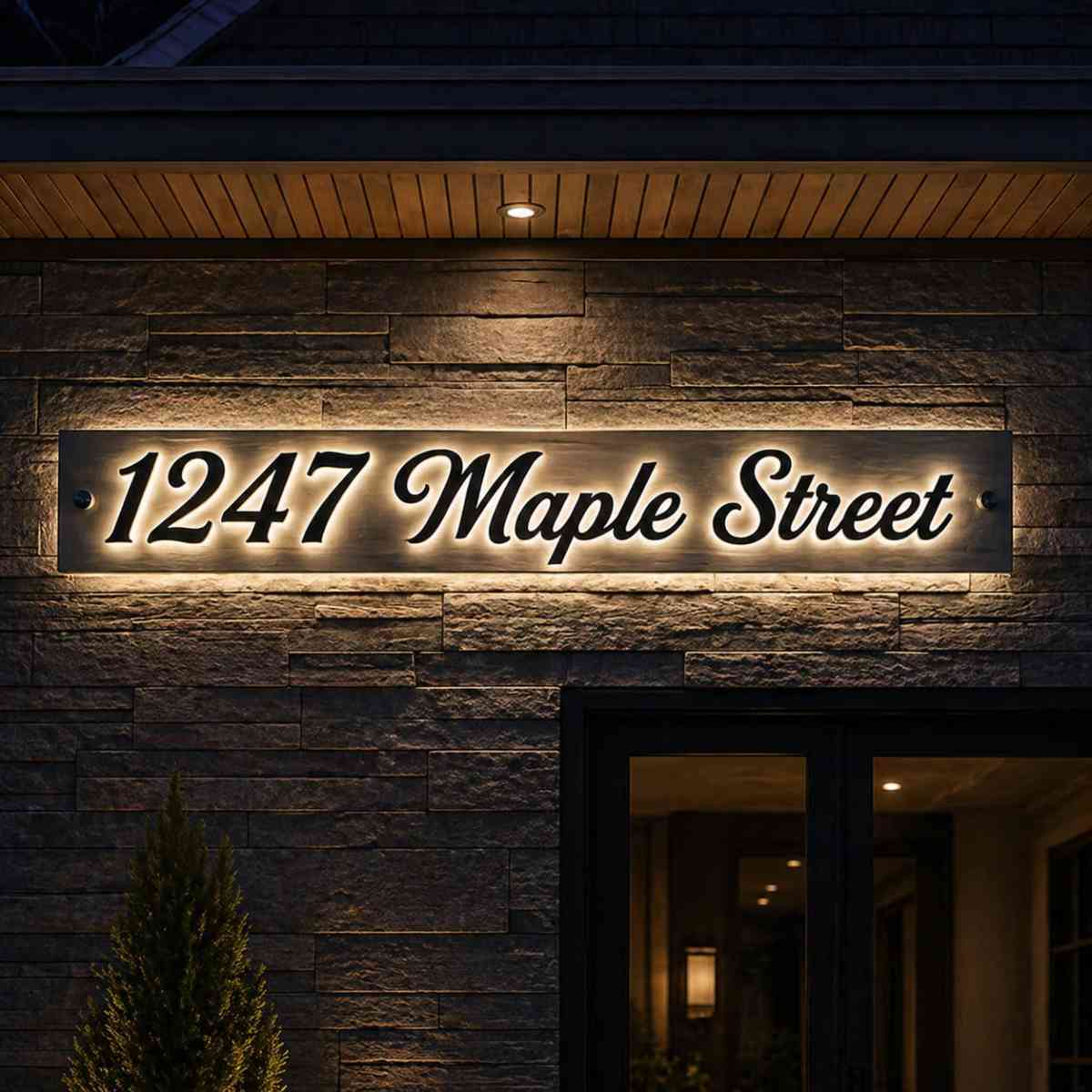
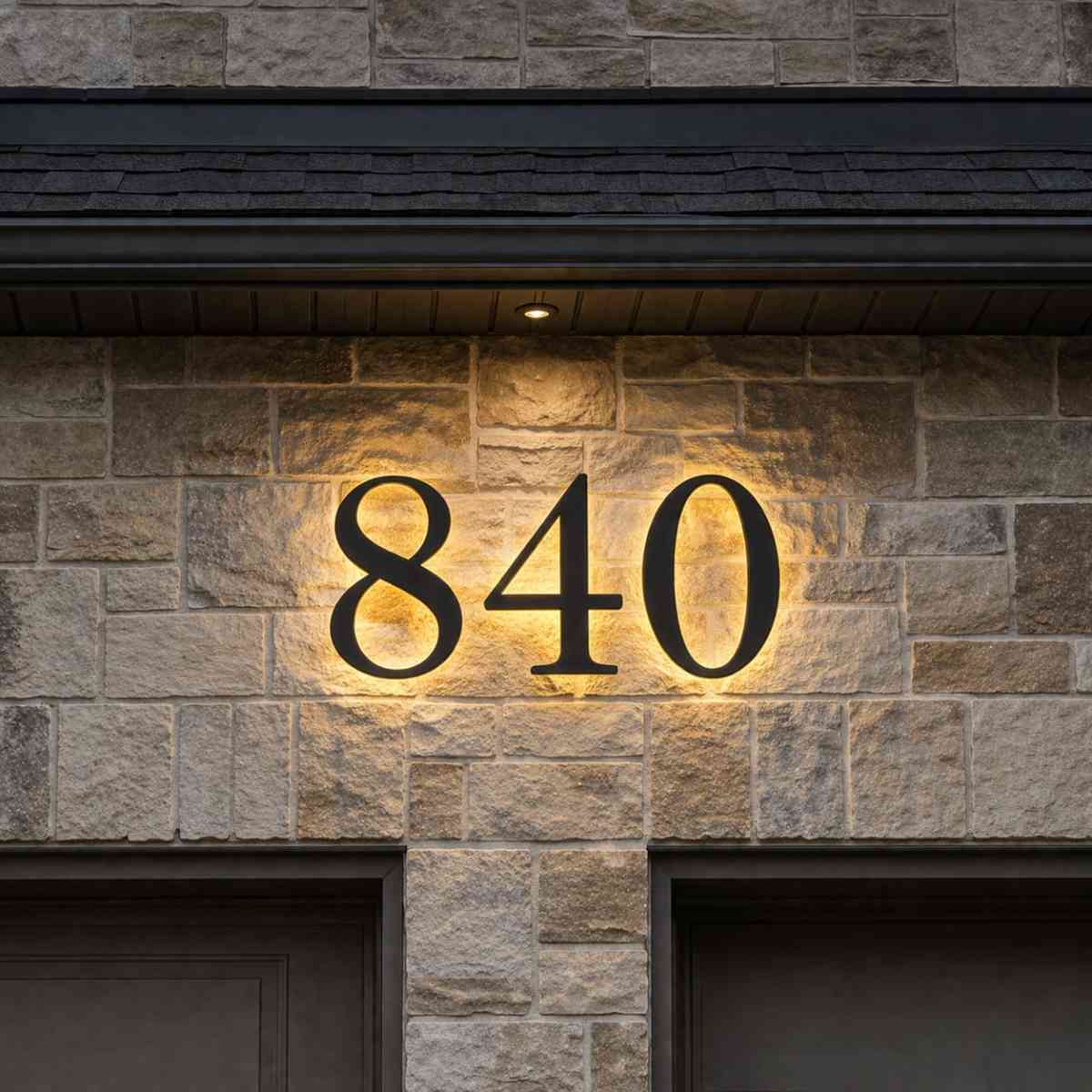
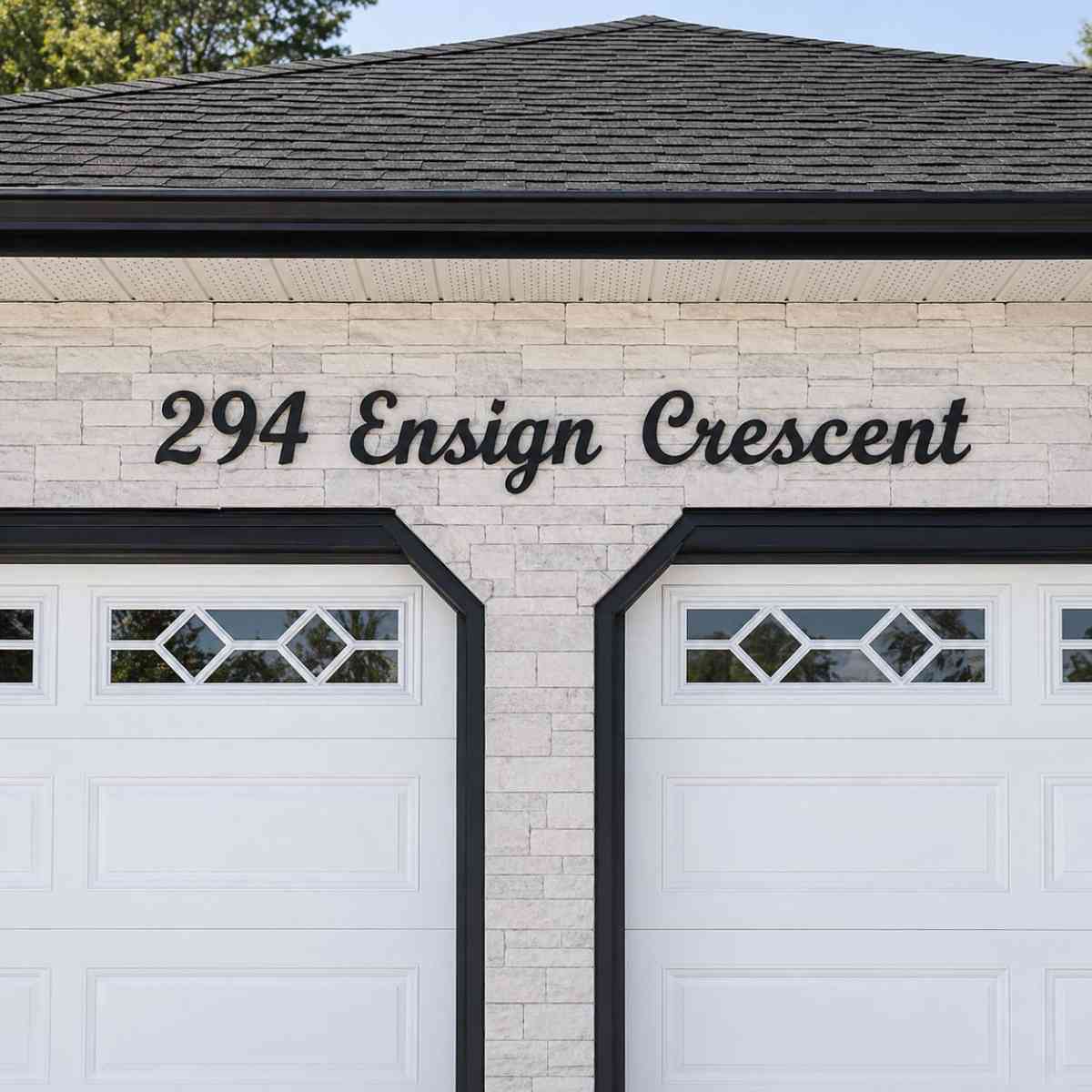
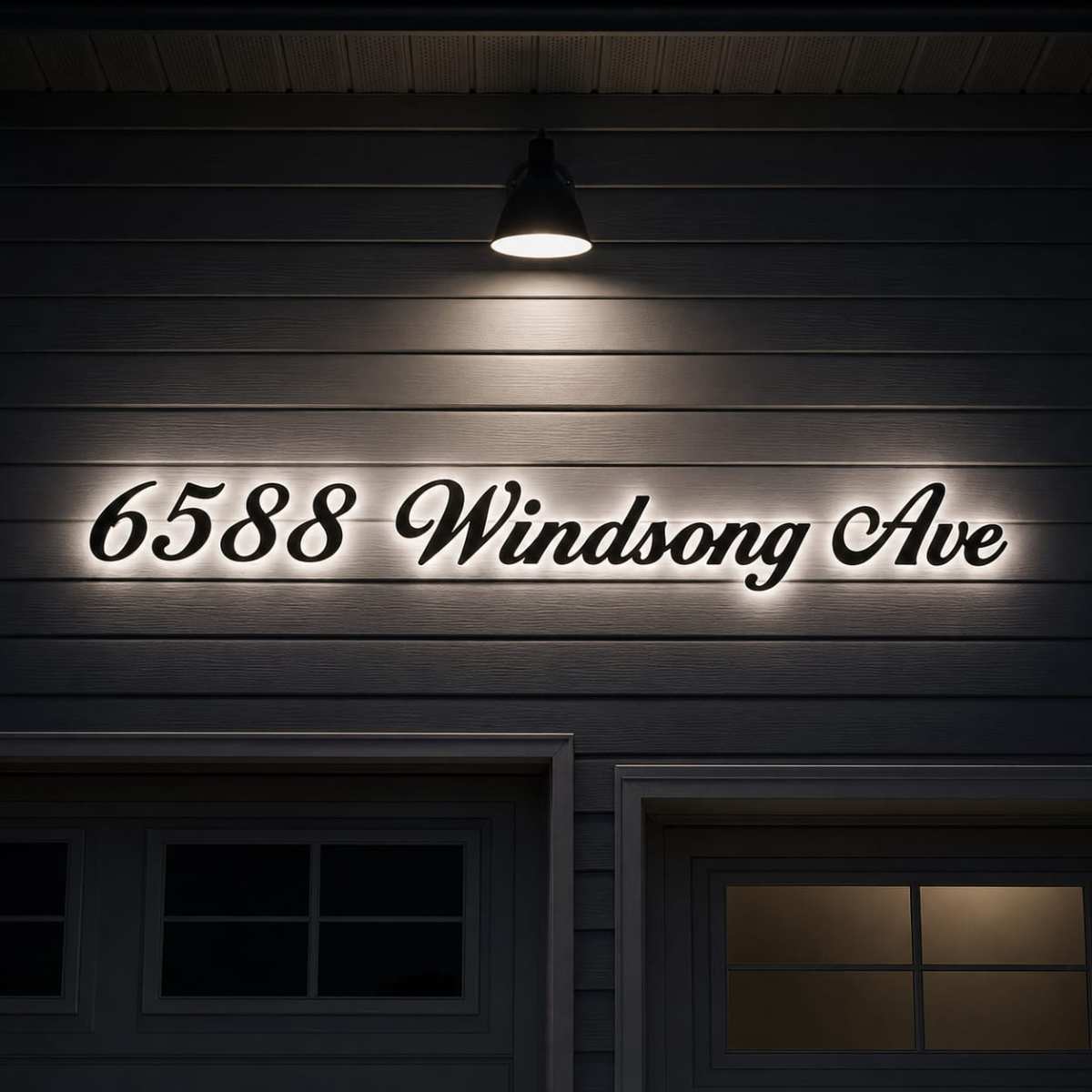
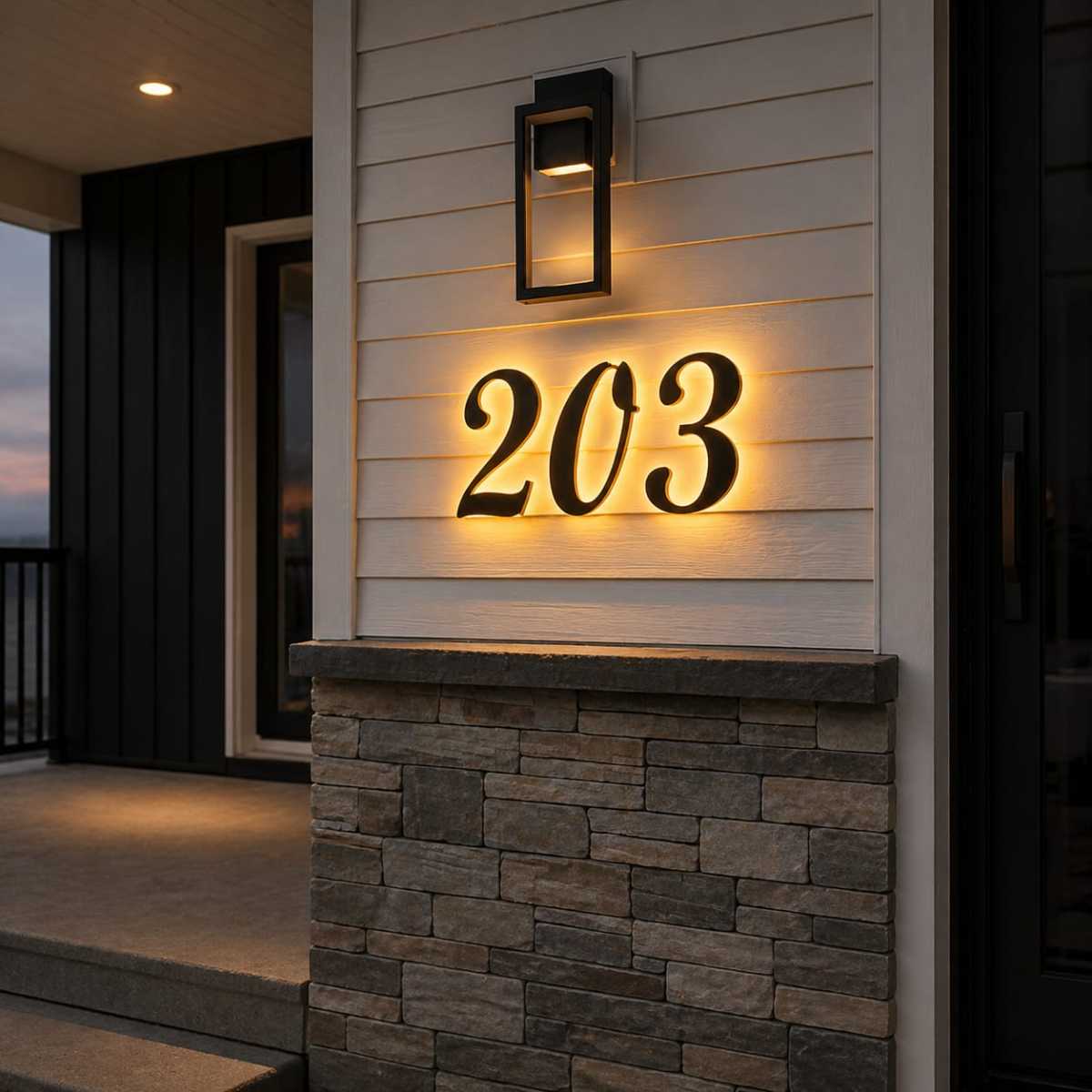
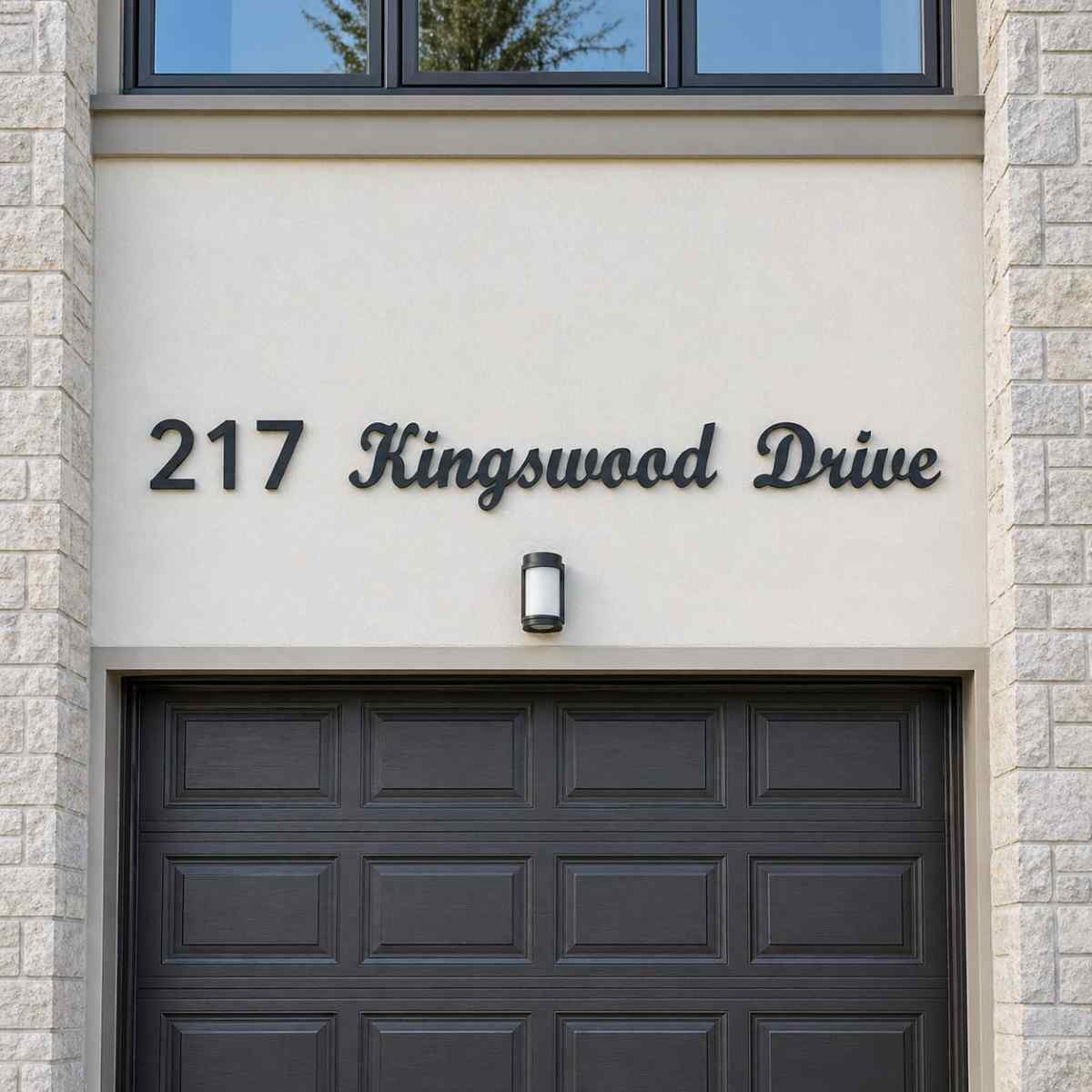
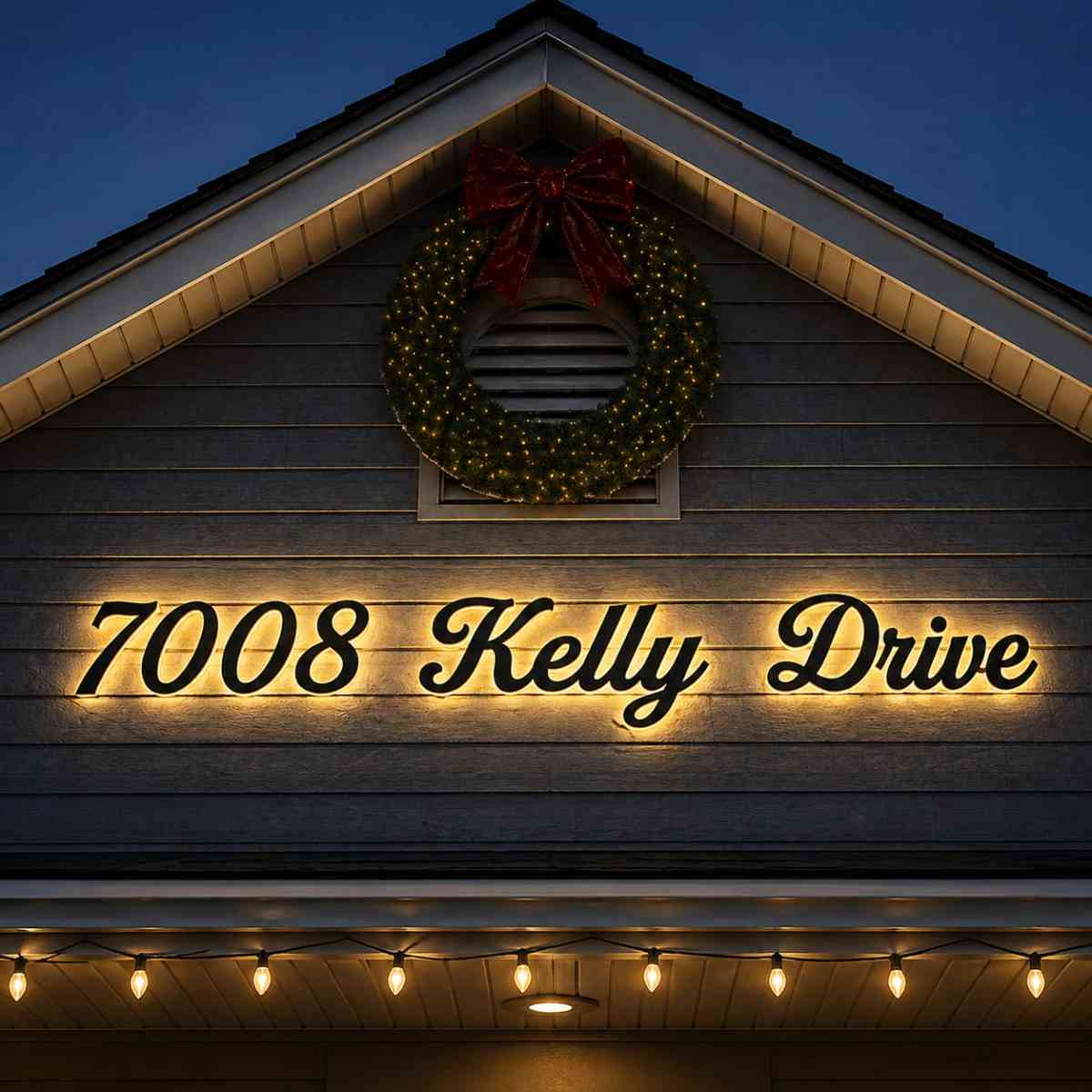
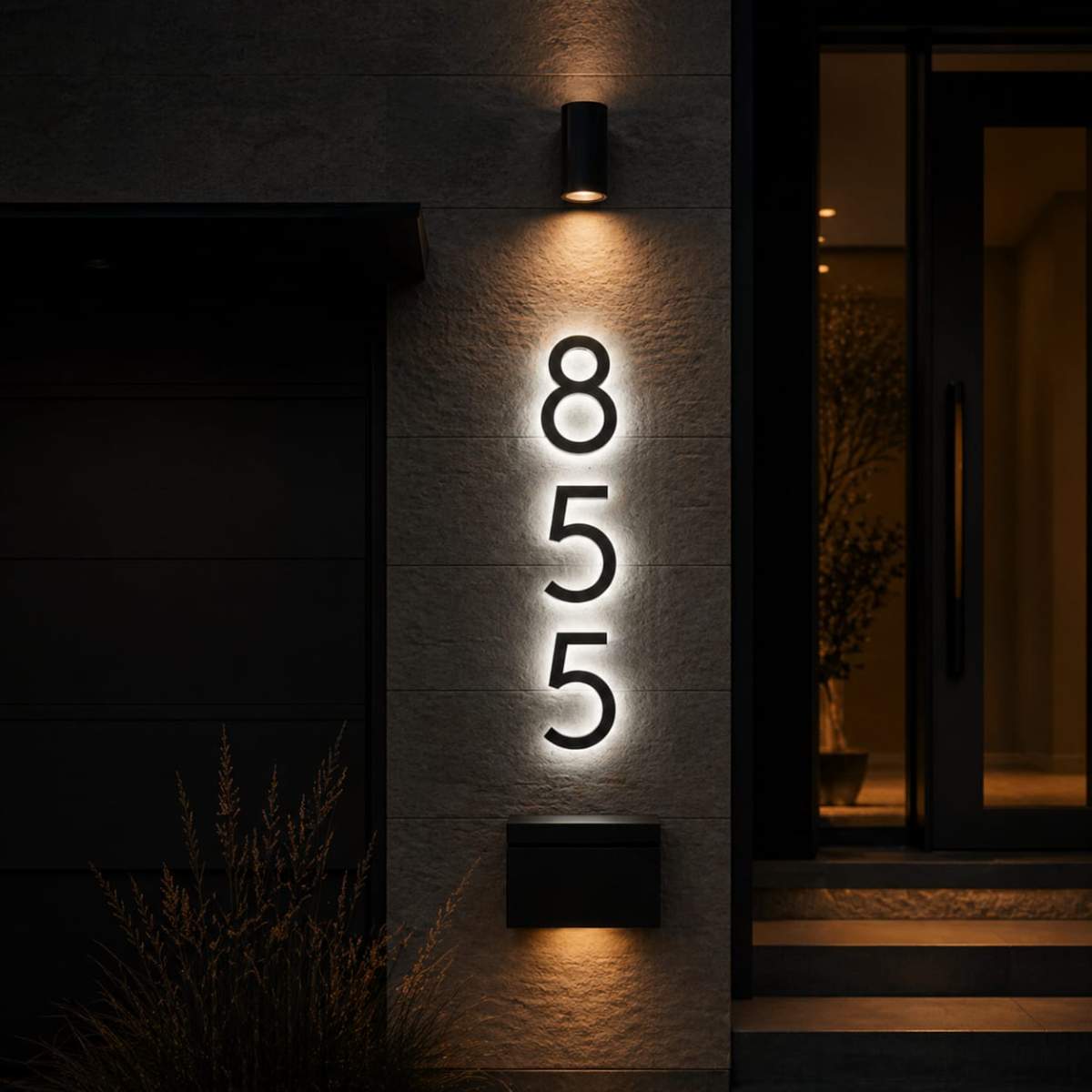
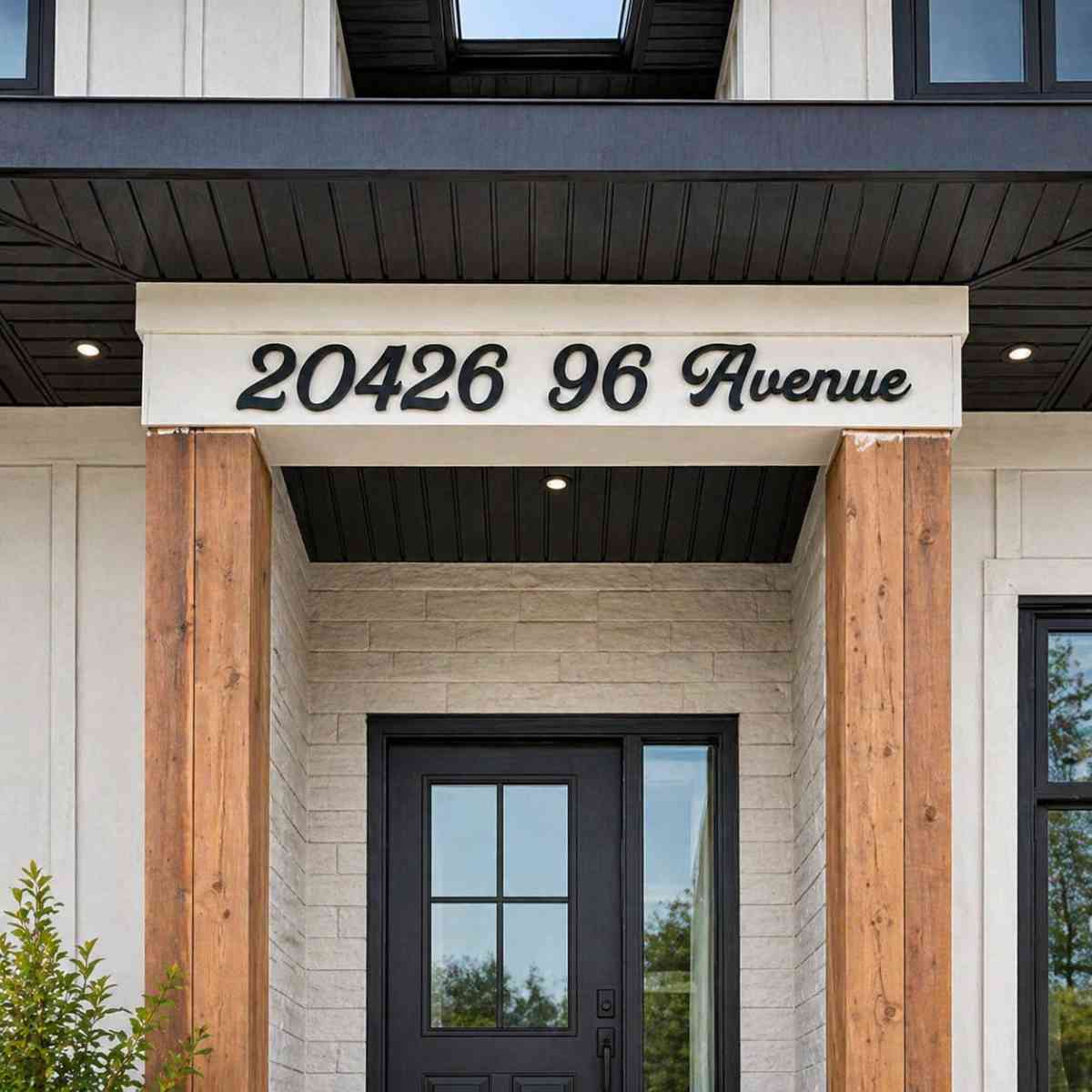
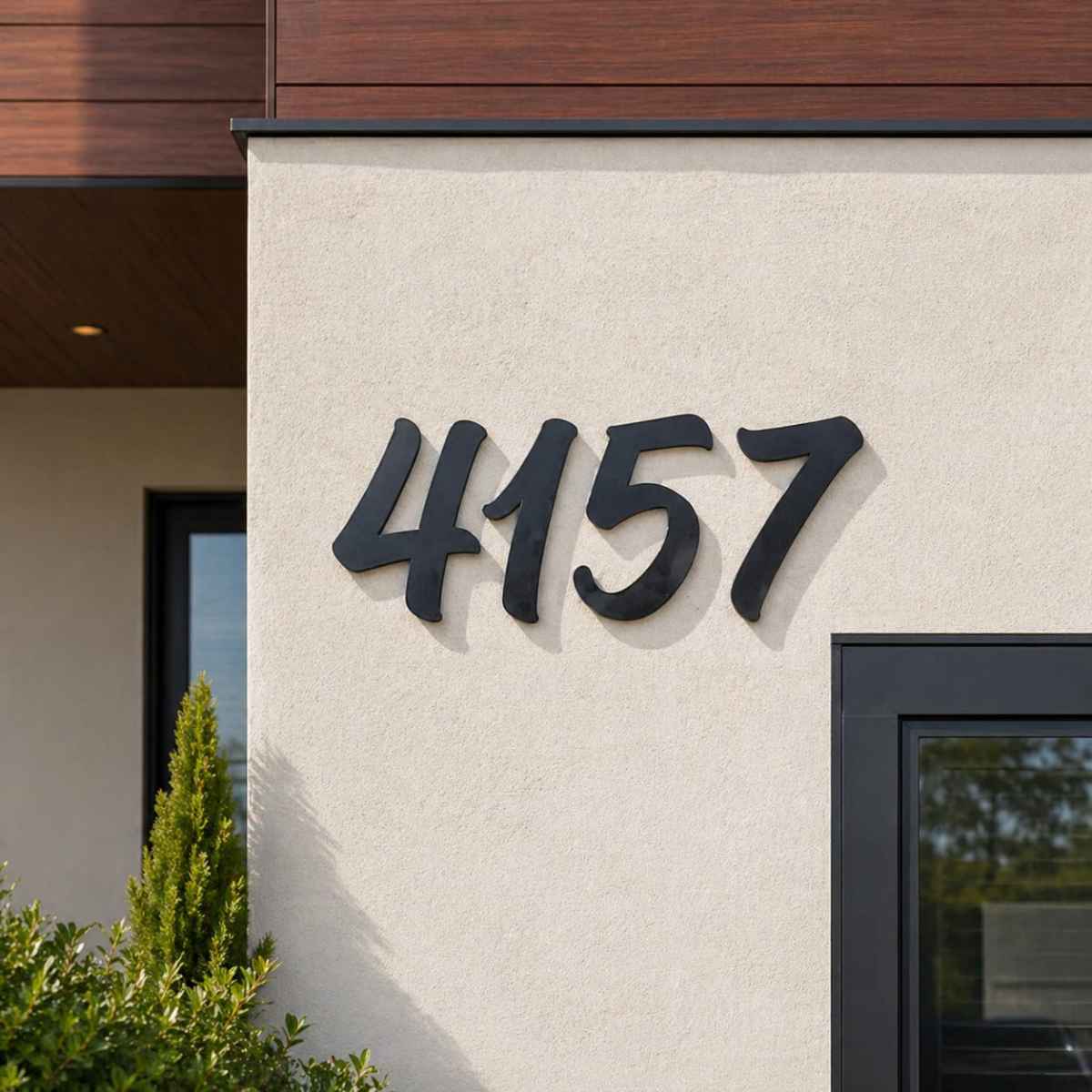
Non-illuminated house number signs provide a simple and reliable way to display your address. For many homes across Canada, especially in areas with adequate street lighting, these signs offer clear visibility without the need for electrical components. They are a practical choice for homeowners who want durable, low-maintenance signage that blends well with their home’s exterior.
A well-designed non-illuminated sign focuses on clarity, contrast, and placement. When these elements are done correctly, your house number remains easy to read in both daytime and low-light conditions.
Ready to Design Your Non-Illuminated House Number Sign?
Start Designing Your Sign — Customize materials, colors, sizes, and fonts to match your home's style.
Explore Other Products
Browse All Products — Discover our complete range of illuminated and non-illuminated signage solutions.
What Are Non-Illuminated House Number Signs in Canada?
Definition of Non-Lit Address Number Signs
Non-illuminated house number signs are address displays made without built-in lighting. They rely on clear typography, strong contrast, and proper positioning to remain visible from the street.
These signs are commonly installed on exterior walls, fences, gates, or near entryways. They are widely used in residential areas where natural light or street lighting provides enough visibility.
Benefits of Non-Illuminated House Number Signs
Cost-Effective Address Signage Solution
Non-illuminated house numbers are generally more affordable because they do not require wiring or electrical components. This makes them a practical option for homeowners looking for a straightforward solution.
Timeless Design for All Home Styles
These signs suit both modern and traditional homes. Simple number styles and clean finishes allow them to blend naturally with different architectural designs.
Low Maintenance Outdoor House Numbers
Without lighting components, there is less to maintain over time. A well-built sign can remain in good condition for years with minimal upkeep.
Durable for Canadian Weather Conditions
High-quality materials ensure the sign can withstand snow, rain, and sunlight. Proper finishes help prevent rust, fading, and surface damage, allowing the numbers to remain clear and visible.
Materials for Durable Non-Illuminated House Numbers
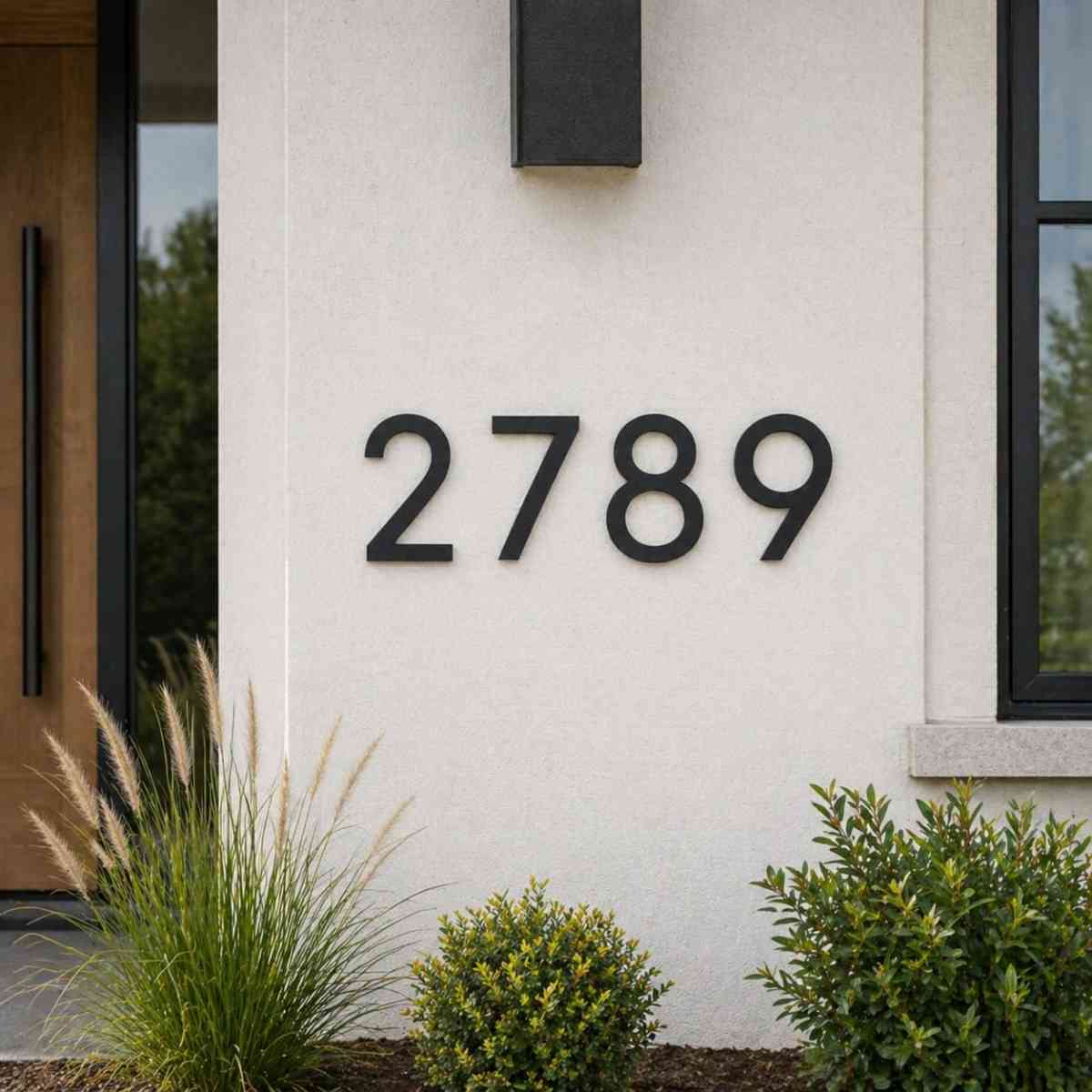
Choosing the right materials is important for long-term durability and consistent appearance.
Common Materials for Outdoor House Numbers
- Powder-coated aluminum for rust resistance and durability
- Stainless steel for strength and long-term use
- Acrylic for a clean and modern finish
Finish Options for House Number Signs
- Matte Black for a subtle and modern look
- Glossy Black for a bold and visible finish
- Matte White for soft contrast
- Glossy White for a clean and bright appearance
- Gold for a decorative and premium look
- Silver for a sleek and contemporary style
Visibility Tips for Non-Illuminated House Number Signs
Use High Contrast for Better Readability
Contrast between the numbers and background is the most important factor for visibility. Light numbers on a dark surface or dark numbers on a light surface improve readability, especially during low-light conditions.
Choose the Right Number Size
The size of your house numbers should match the distance from the street. Larger numbers are easier to read for homes set back from the road, while standard sizes work well for closer placements.
Place the Sign for Maximum Visibility
Install the sign where it is clearly visible from the street. Avoid placing it behind plants, decorations, or shaded areas that can reduce visibility.
Installation Guide for Non-Illuminated House Number Signs
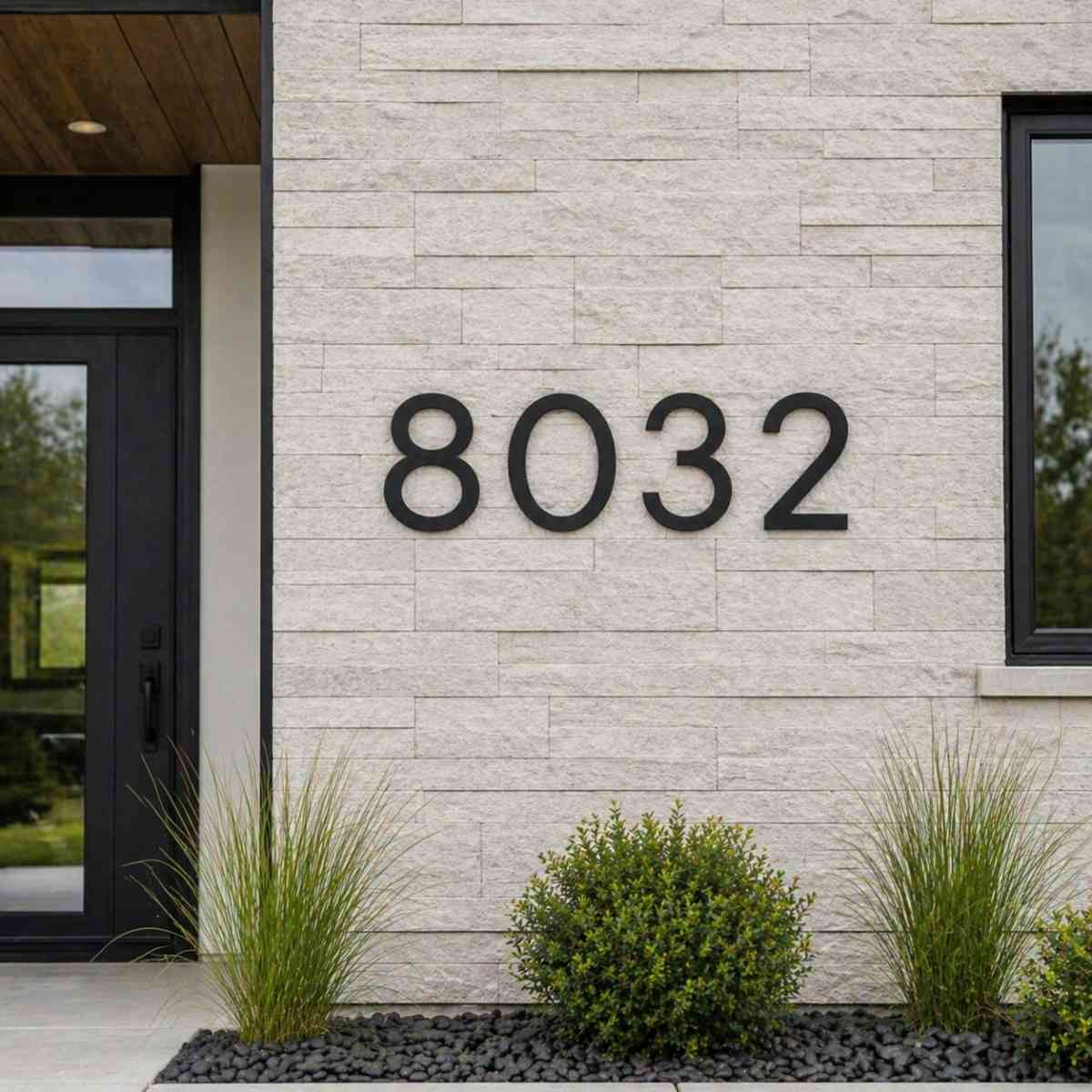
Select a Visible Installation Location
Choose a location that can be easily seen from the main approach to your home. Entry walls, gates, and mailbox areas are common choices.
Align Numbers Properly for a Clean Look
Measure carefully to ensure the numbers are evenly spaced and aligned. Proper alignment improves both readability and overall appearance.
Secure Mounting for Long-Term Stability
Use appropriate mounting hardware to ensure the sign remains firmly attached. This prevents movement or damage caused by weather conditions.
Check Visibility from the Street
After installation, step back and view the sign from a distance. Make sure the numbers are easy to read and adjust if necessary.
Common Mistakes When Choosing House Number Signs
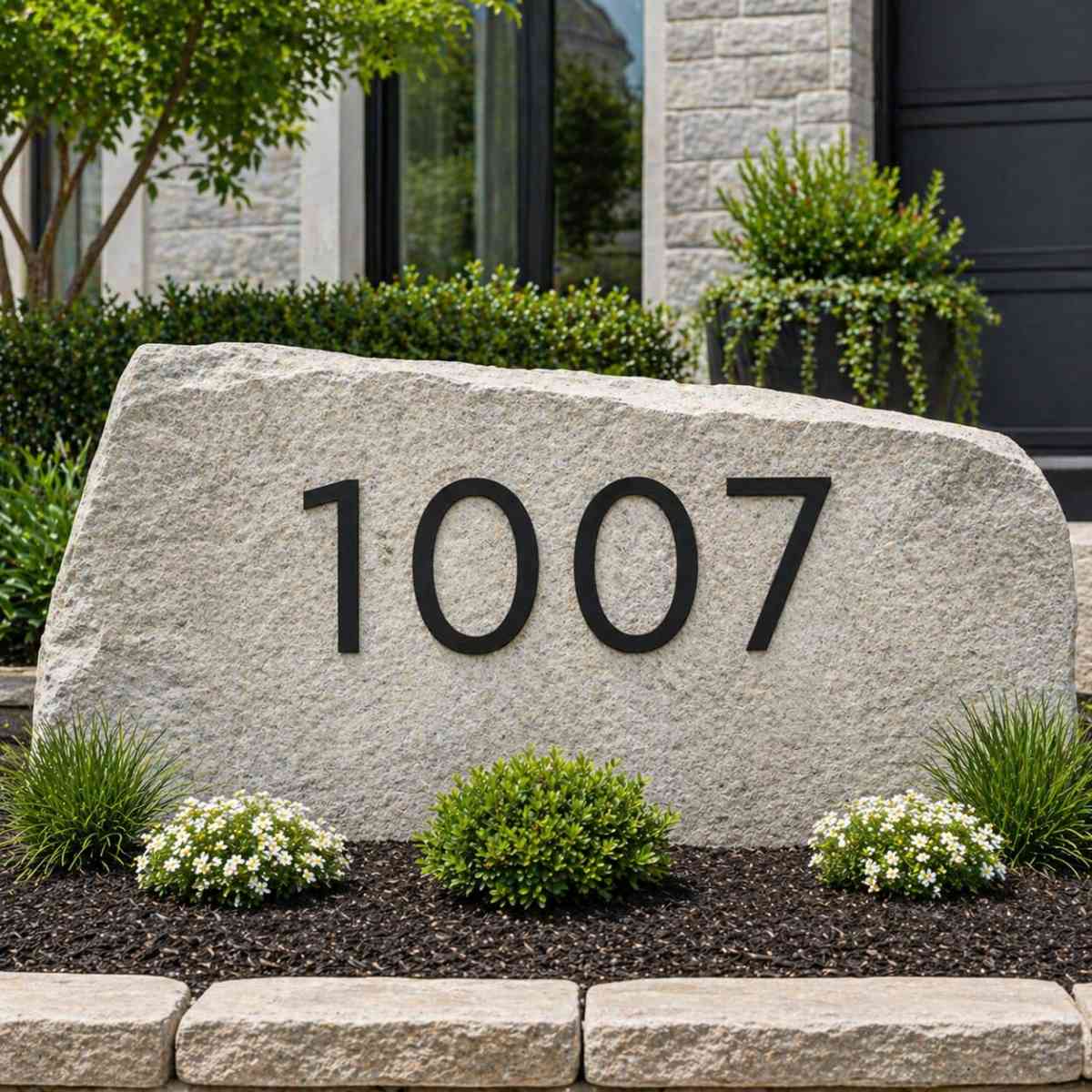
One common mistake is choosing colors that blend into the background. Low contrast makes the numbers difficult to read, especially during evening hours.
Another issue is poor placement. Signs that are too low, hidden, or placed in shadowed areas reduce visibility. Proper positioning ensures the sign works effectively.
Using low-quality materials can also lead to fading or damage over time. Choosing durable materials helps maintain clarity and appearance.
How to Design Custom Non-Illuminated House Numbers
Designing your house number sign allows you to match your home’s exterior while maintaining clear visibility. You can select materials, finishes, and number styles that fit your design preferences.
Our online configurator makes it easy to preview your design before placing an order. This helps ensure the final result meets your expectations.
Design Your Custom Sign
Final Thoughts on Non-Illuminated House Number Signs
Non-illuminated house number signs offer a reliable and straightforward way to display your address. With the right materials, contrast, and placement, they provide clear visibility and long-term durability.
They are a suitable choice for homeowners who want a clean, low-maintenance signage solution that fits naturally with their property.
Related Products and Guides